Simmer
Brand Designer, Web Designer
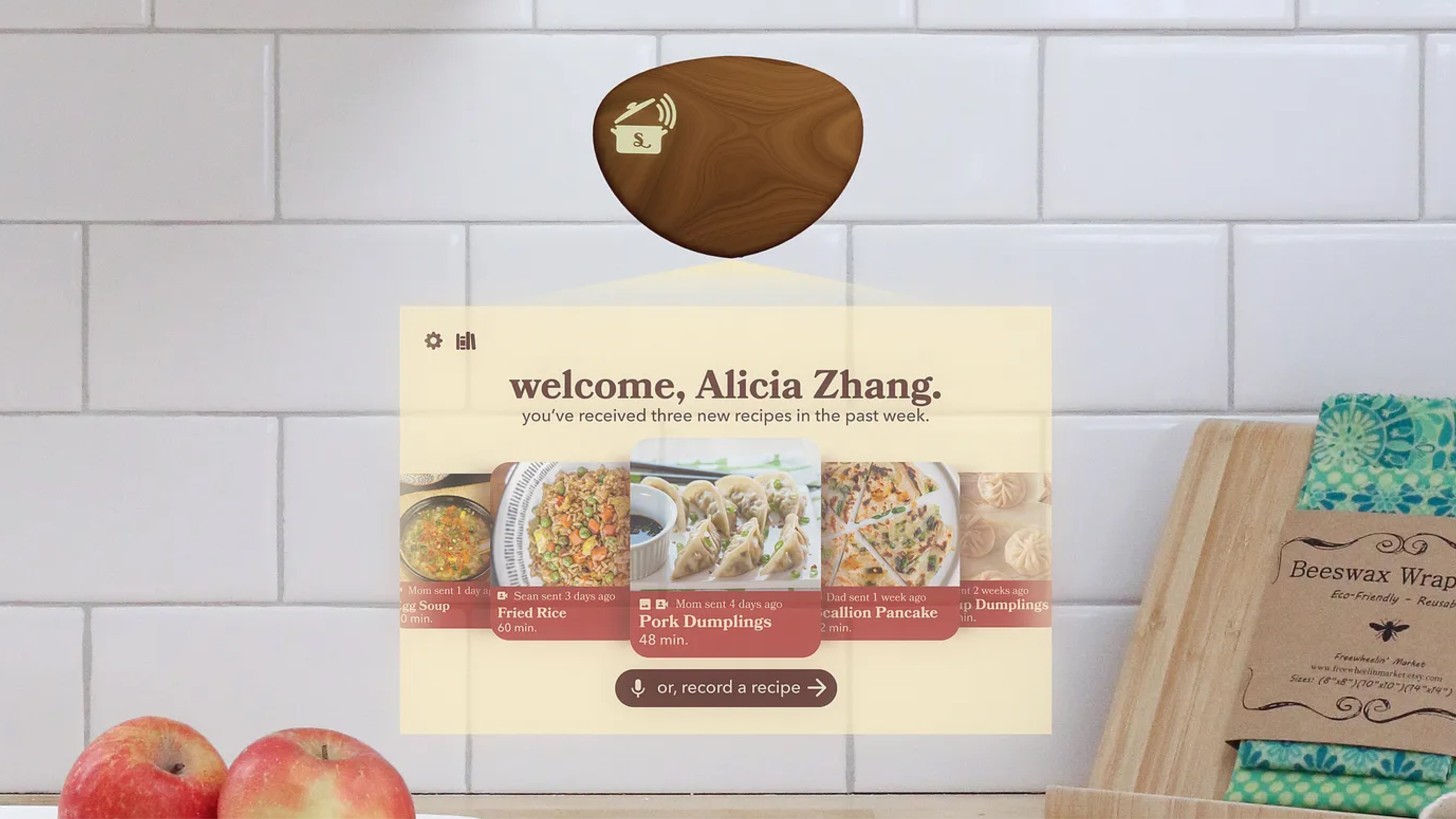
A shared cooking experience designed to help families celebrate cultural holidays through food, even when they’re separated by distance. By combining guided recipes and shared storytelling. Simmer recreates the feeling of being in the same kitchen, allowing traditions, memories, and flavors to be passed down across generations and time zones.
Team:
Chloe Koh, Stephanie
Role:
Ux Designer, 3d Modeler
Year:
2023
Interviews and synthesis
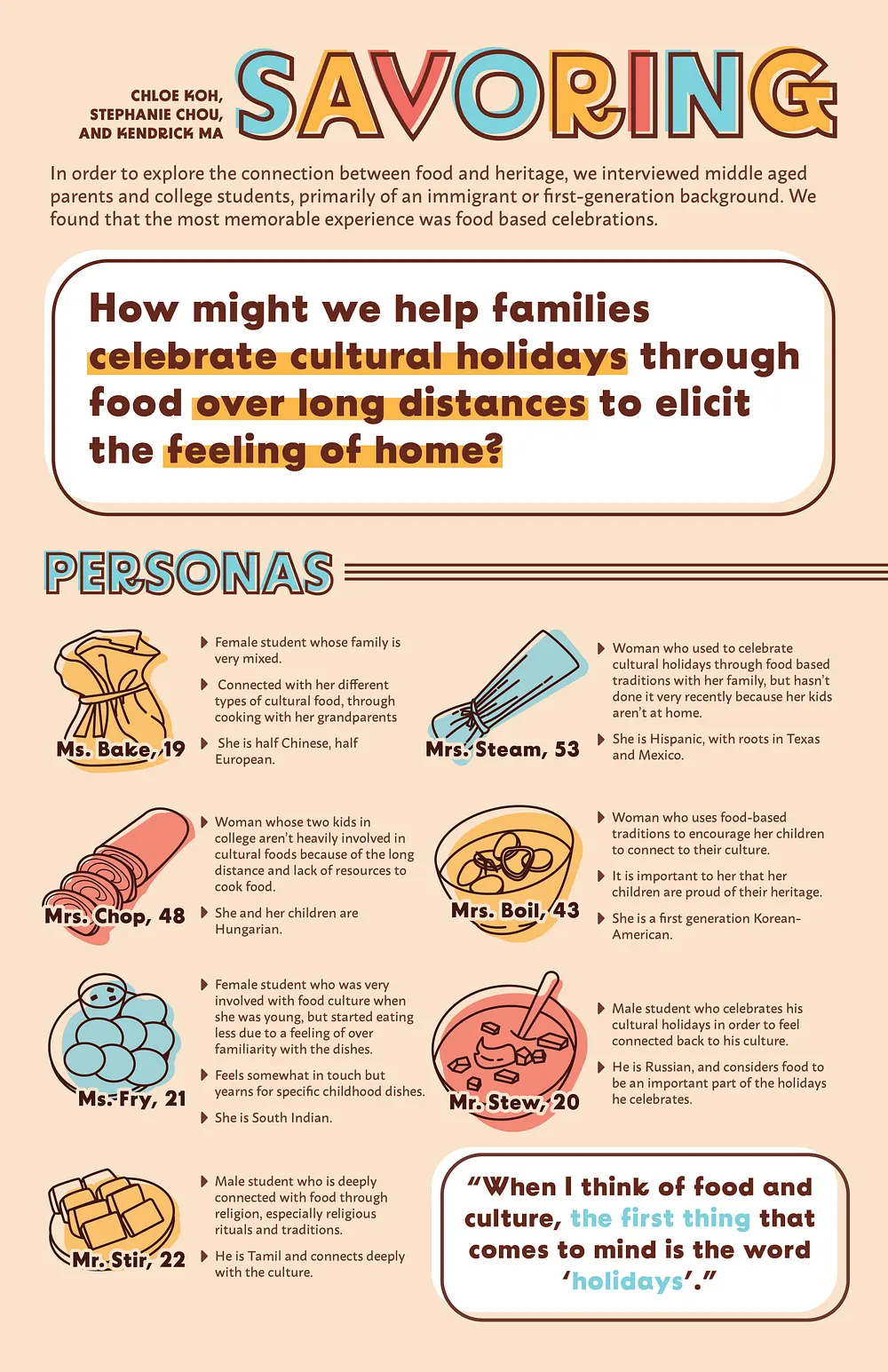
When we were given the prompt “Revealing Heritage Through Food”, we quickly decided to focus on first-generation Americans or immigrants. Knowing that we had an interview turnaround time of a few days, we sent out a screener survey on various social media platforms, the most responses coming from the UW Parent Group on Facebook, receiving over 70 responses and 20 interview volunteers.
We held our interviews in a semi-structured format, through which we encouraged participants to direct the conversation so they would feel more comfortable sharing their unique perspectives.
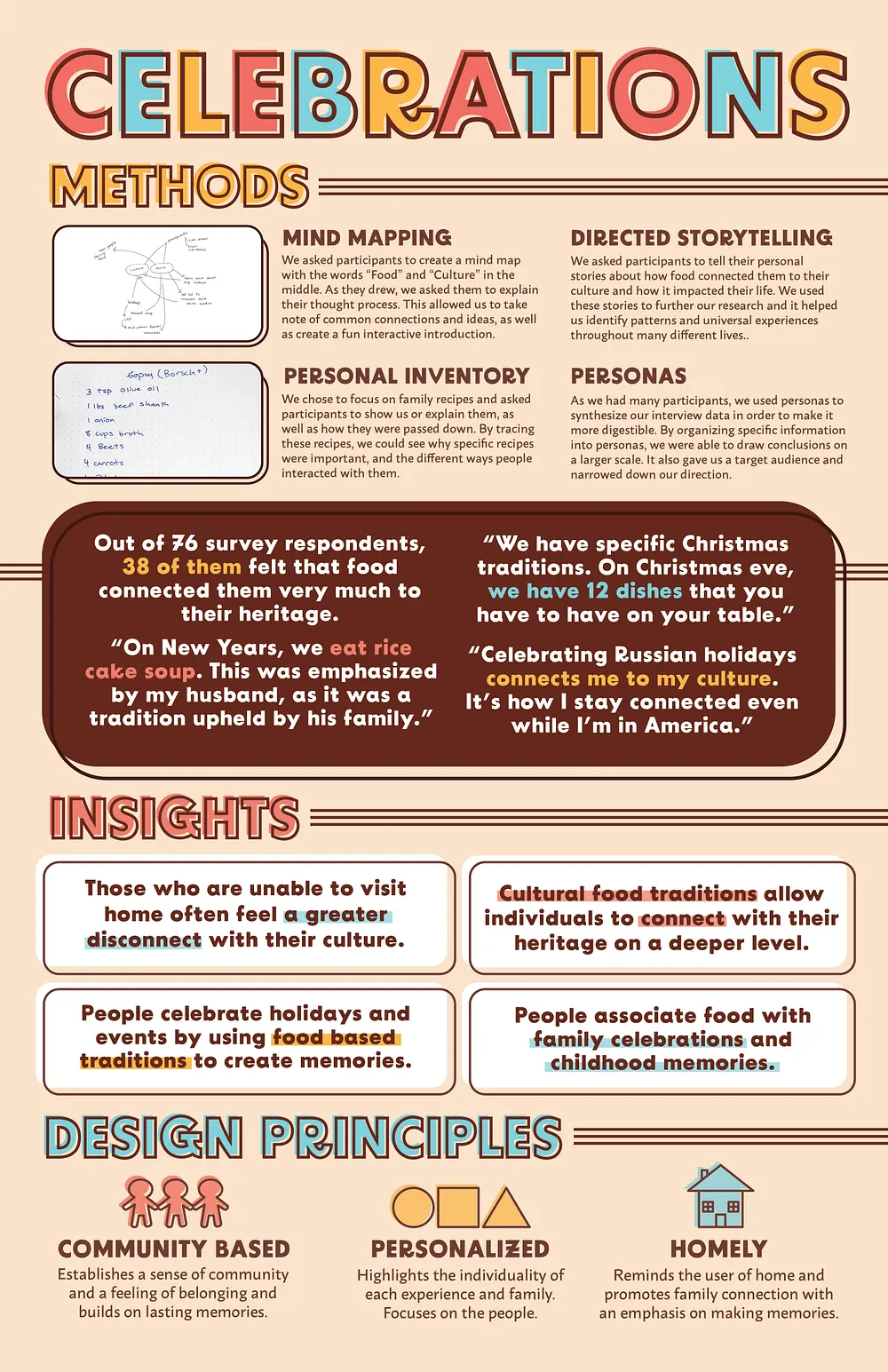
After the interviews, we synthesized our data to come up with 3 to 4 insights and a “How-Might-We” statement. This How-Might-We statement would drive our project for the rest of the quarter. We decided to move forward with “How might we help families celebrate cultural holidays through food over long distances to elicit the feeling of home?”.
60 Ideas
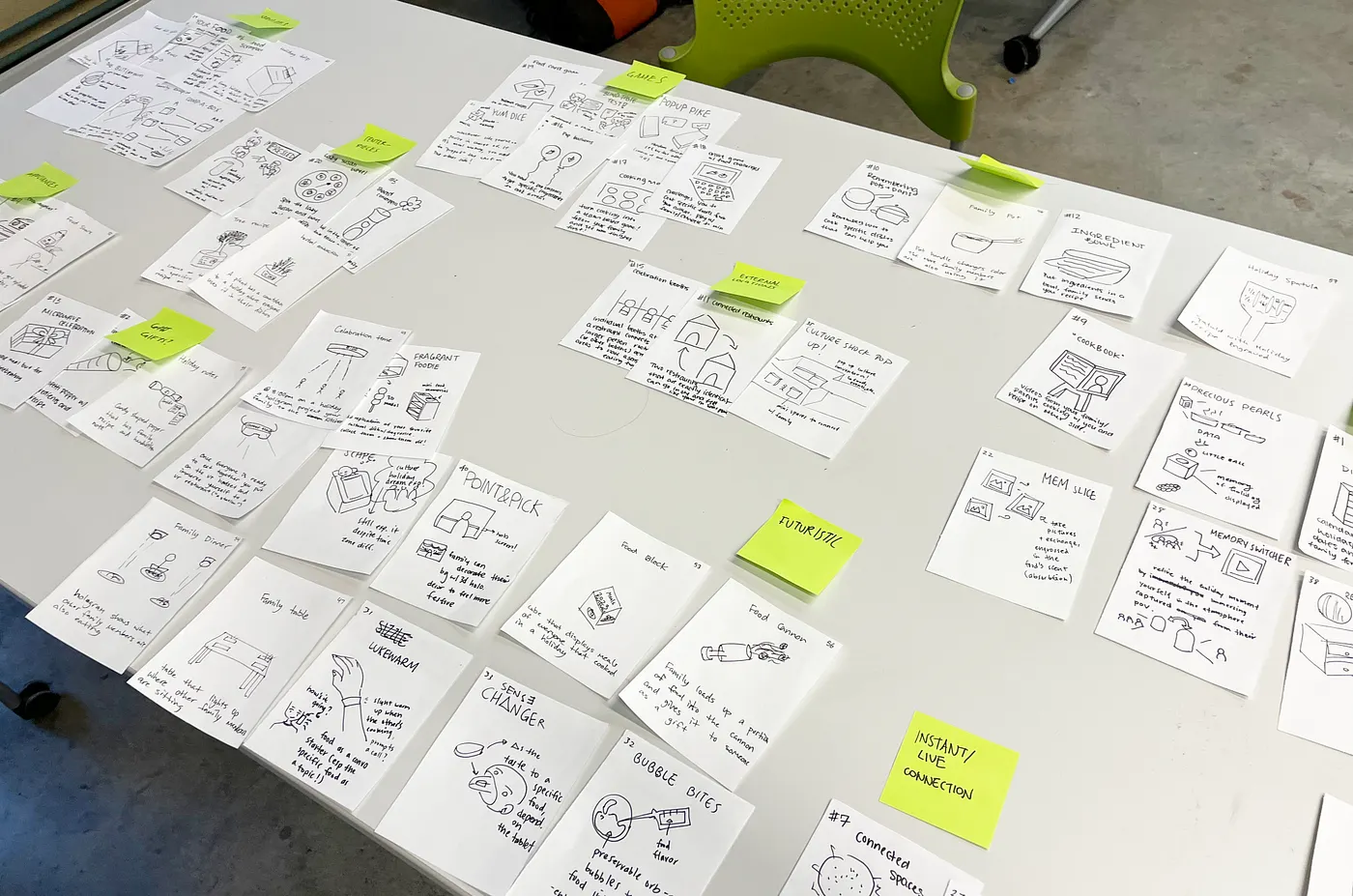
Next, we had a week to ideate 60 different concepts based on our “How-Might-We” and compile them into a stack of quarter pages. The three of us decided to split ideating into 20 ideas each while constantly communicating to prevent overlaps. Once we each had our ideas, we came back together and laid them out on a table. Then, we began to sort.
Press enter or click to view image in full size
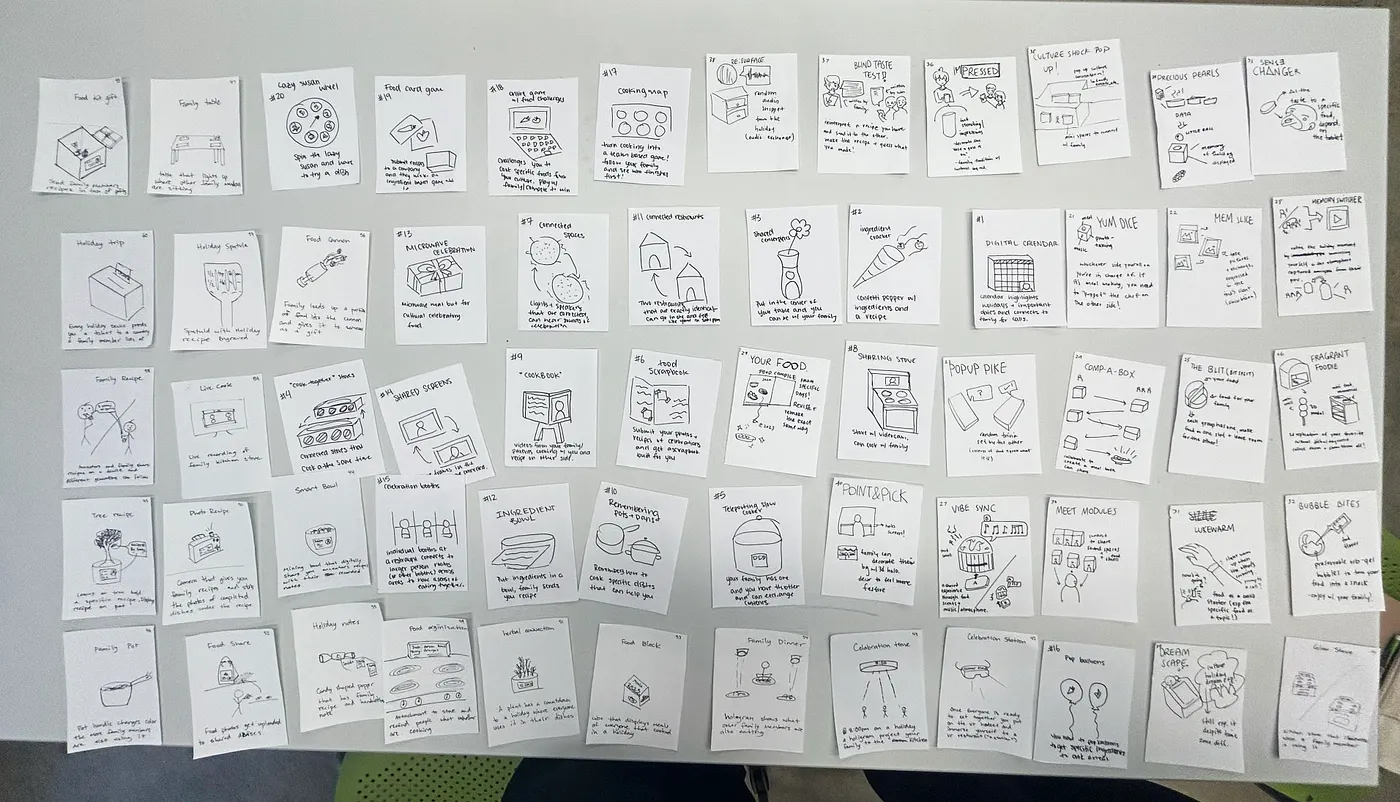
As expected, it was easy to throw out a majority of the ideas, but it did give us a very fast and effective way of getting an idea of exactly what we wanted to produce. We selected six ideas we thought were promising to explore, and started to brainstorm on how we could improve them.
Press enter or click to view image in full size
3 Main Ideas
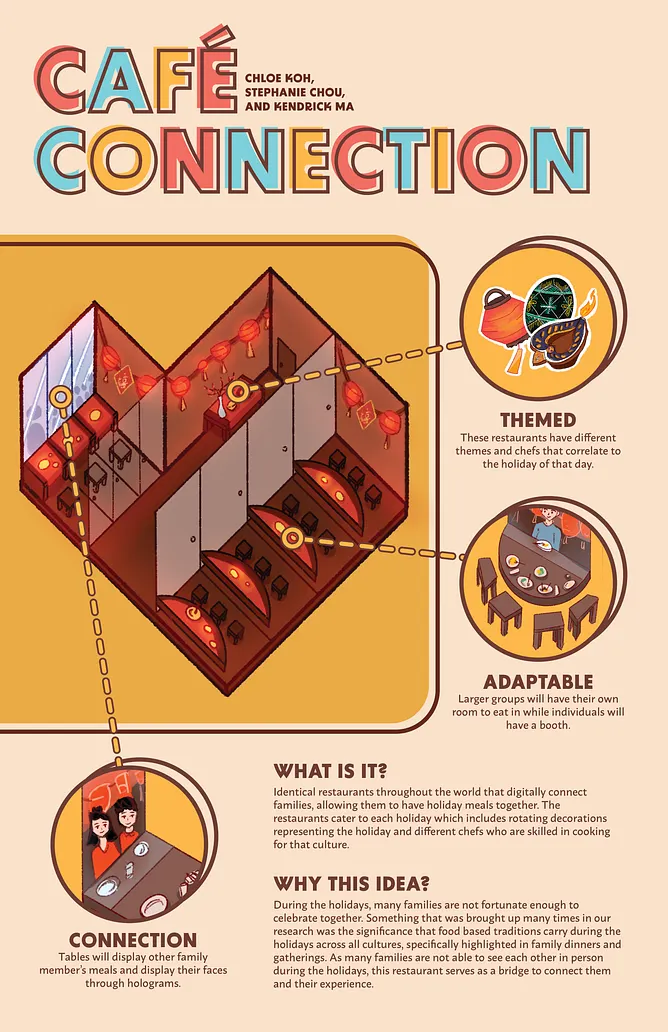
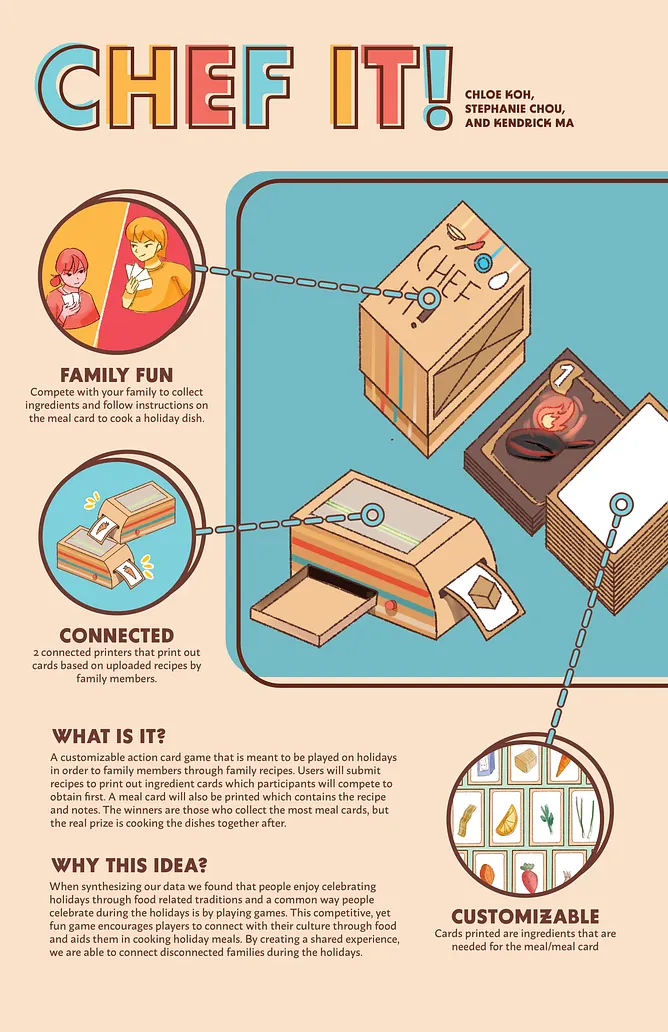
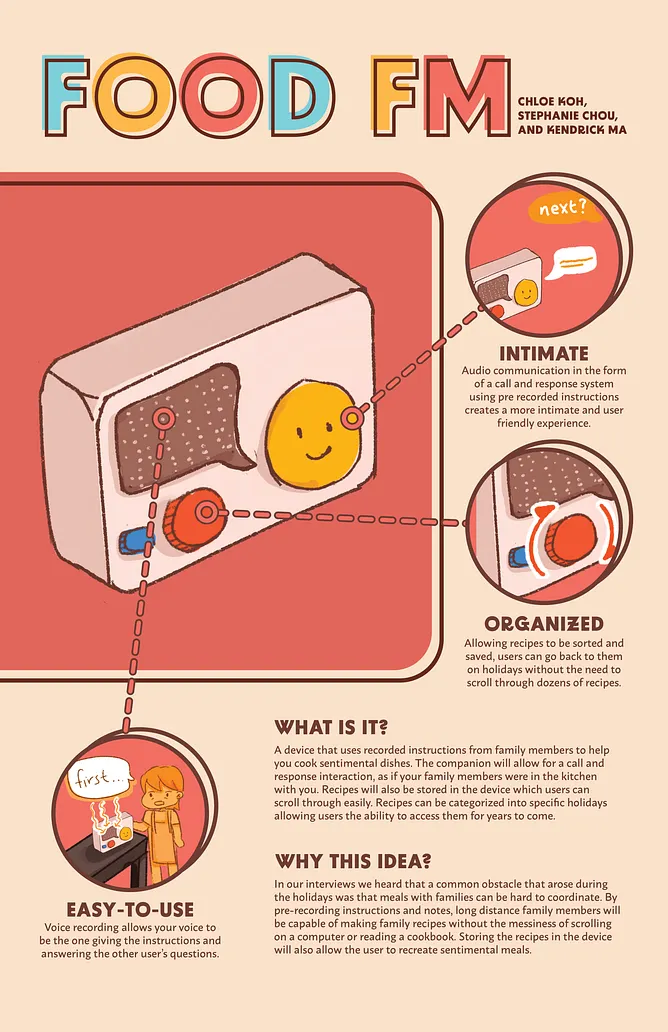
After picking those six, we were prompted to narrow further to three, in order to make a poster for each. However, we quickly hit a roadblock after brainstorming: we felt that only one of these ideas was concrete enough.
In order to solve this, we ran another ideation session; we identified why we liked the remaining idea, and what we could take from our previously-discarded concepts. Eventually, we found two additional ideas that both matched our How-Might-We statement and were intriguing enough to explore further.
Participatory Design Workshop
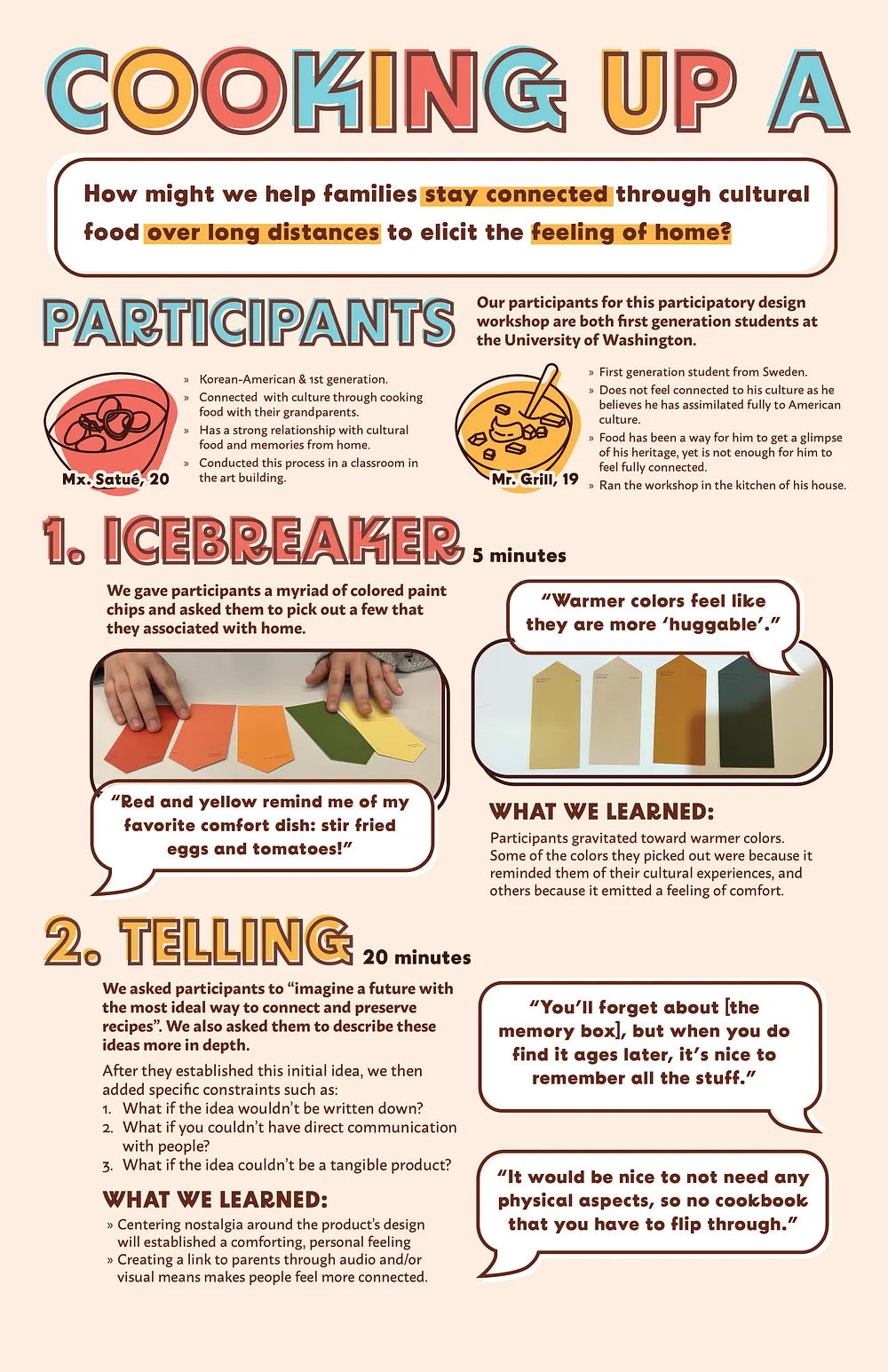
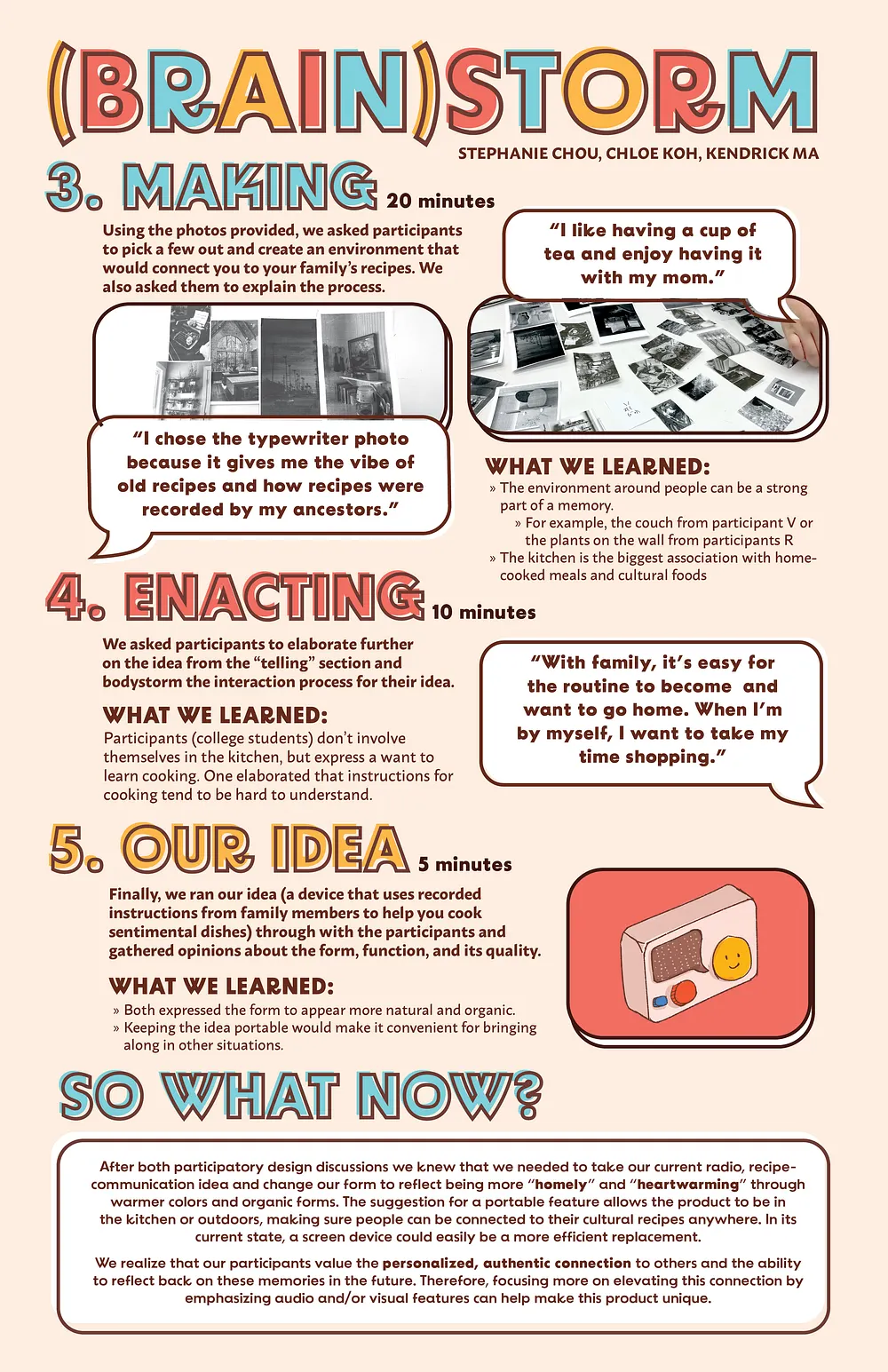
After a lengthy and informative critique session we wanted to move forward with our food-radio FM concept. Knowing this, we went back to the participants; not to interview them, but instead for them to design with us. We knew from critique that we had to change the form, the colors, and possibly parts of the concept, so we designed a workshop that targeted those holes. We had the participants do four different activities: a warm-up, a talking exercise, a making exercise, and an enacting exercise.
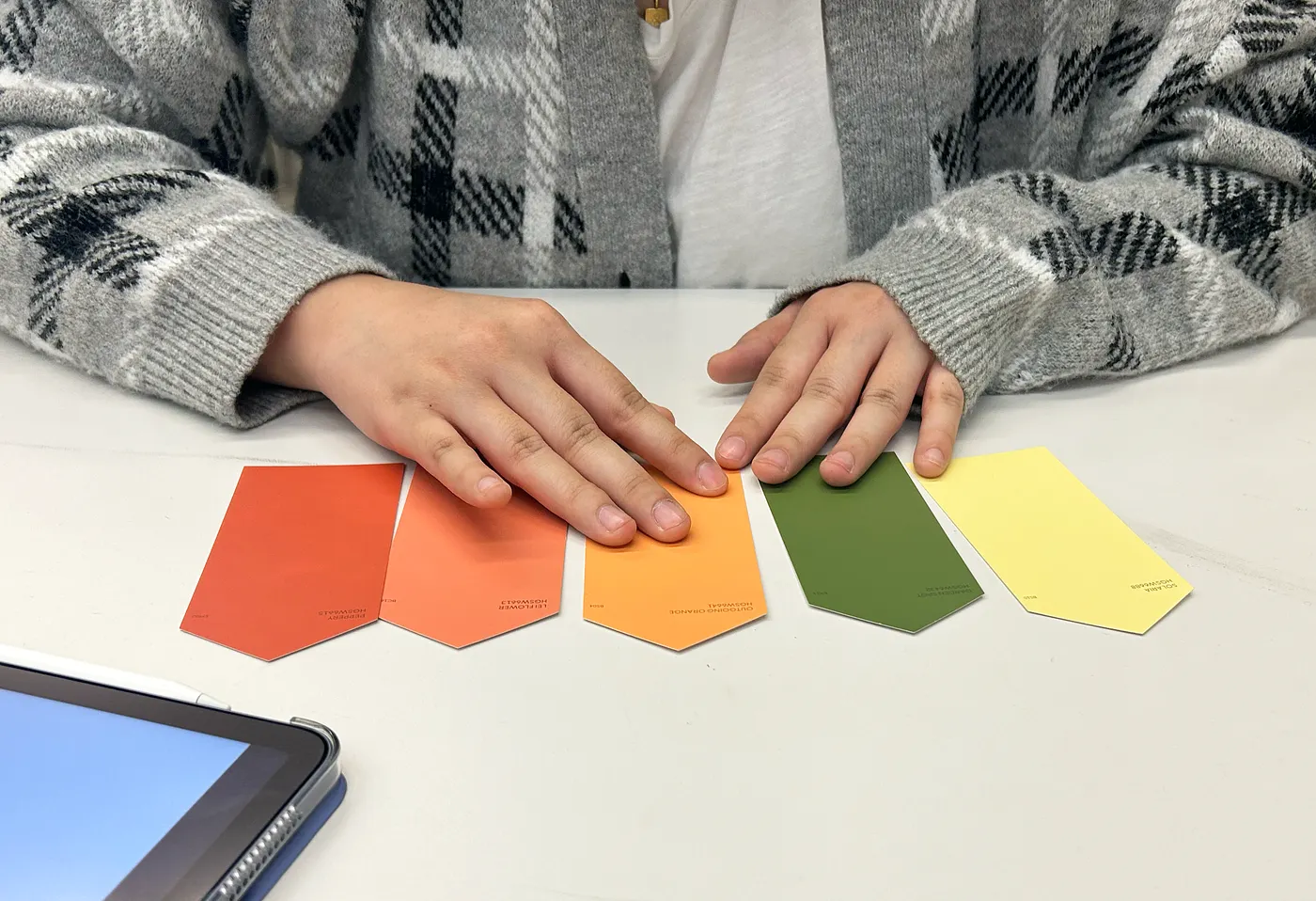
Warm Up
We asked participants to pick four to five different colors from a selection of paint chips that reminded them of home.
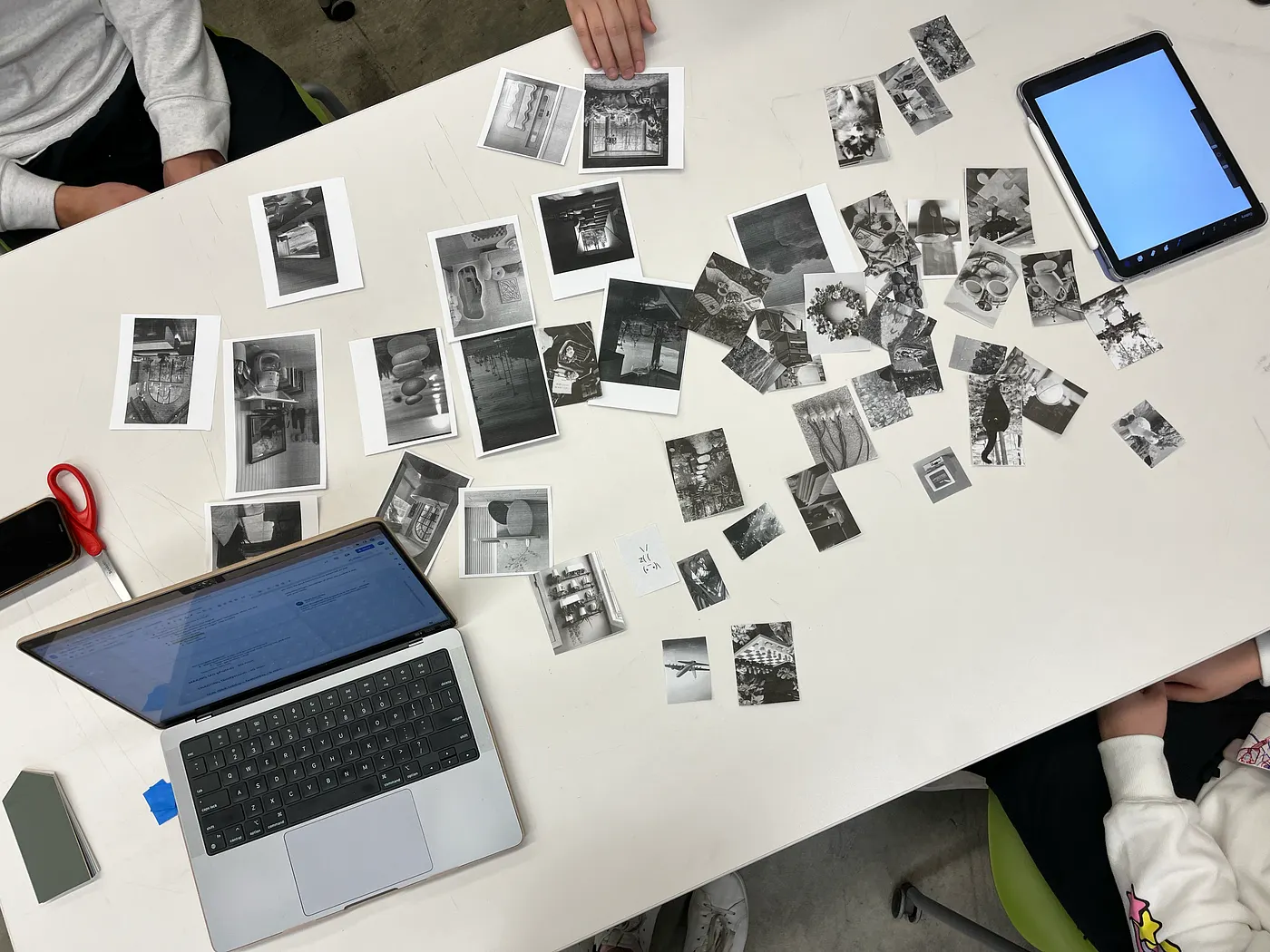
Making
We instructed participants to create a collage using random images pulled from Pinterest in order to illustrate their household kitchen space.
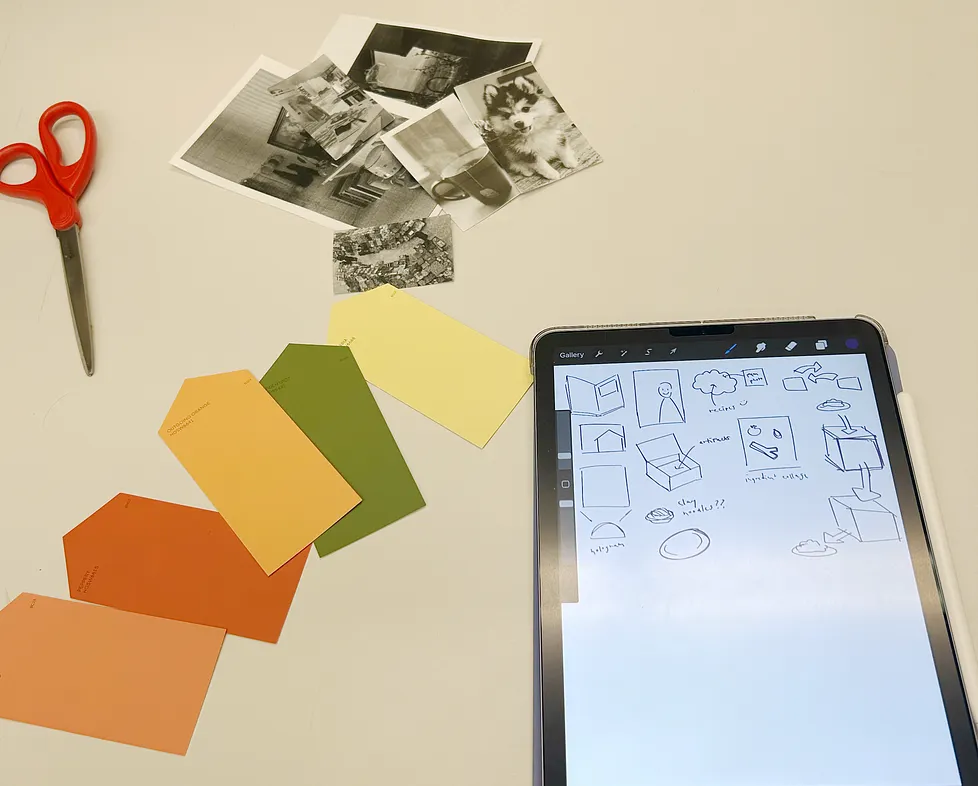
Enacting
We asked participants to guide us through their created space via bodystorming.
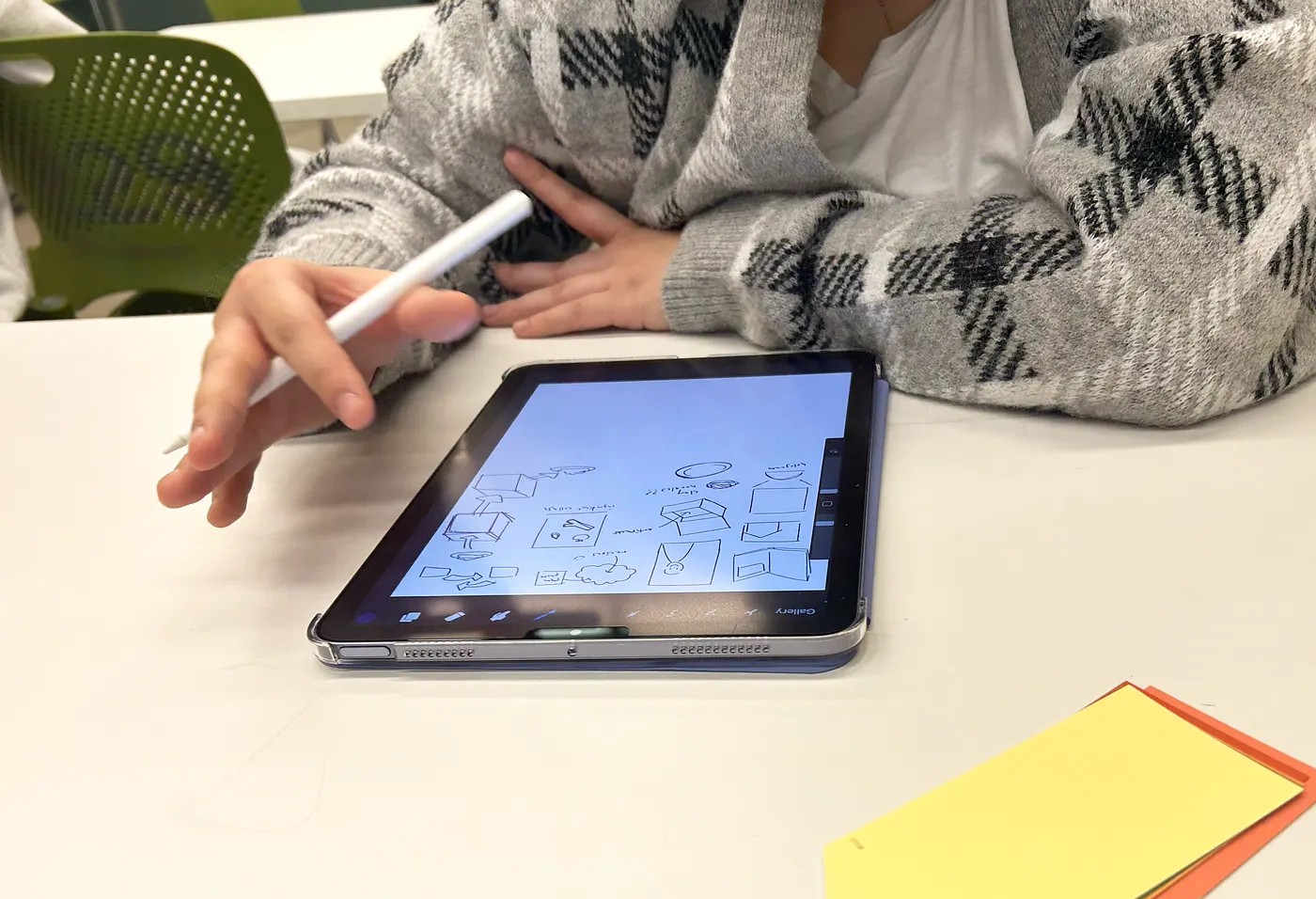
Talking
We asked participants to imagine different solutions to sharing recipes, increasing the difficulty by adding different constraints.
After this process, we realized that the variety of holidays in different cultures, from religious to celebratory means, would create a greater issue of making an inclusive product that was also effective. As a result, we decided to change our How-Might-We statement to: How might we help families stay connected through cultural food over long distances to elicit the feeling of home?
Storyboard
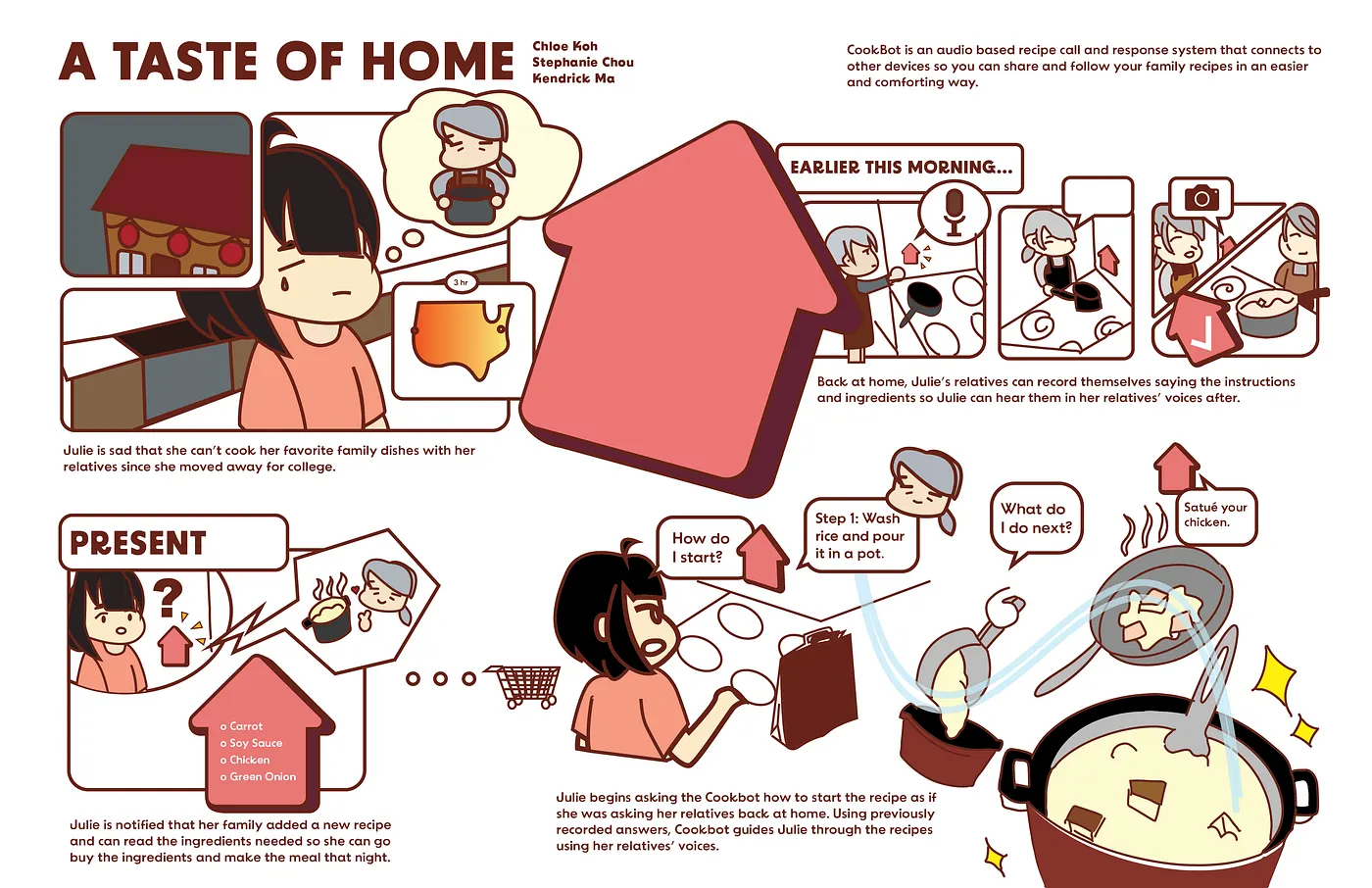
Next, we had to polish the story we wanted to tell with the product. However, we weren’t too certain on the form yet. Instead, we chose to flesh out exactly what interactions we wanted to highlight, deciding to focus mainly on the interaction of the call and response system.
Final Product
Record or Cook
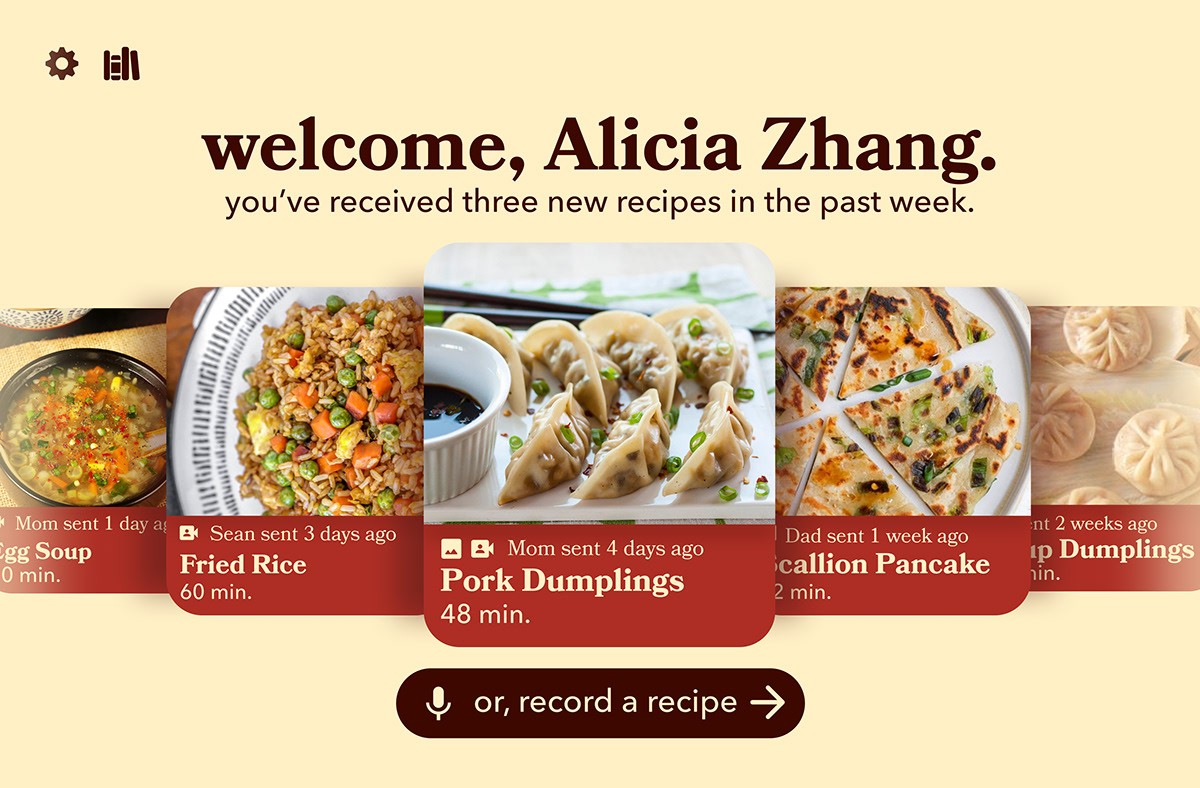
Simmer turns on with a simple "Hey, Simmer."
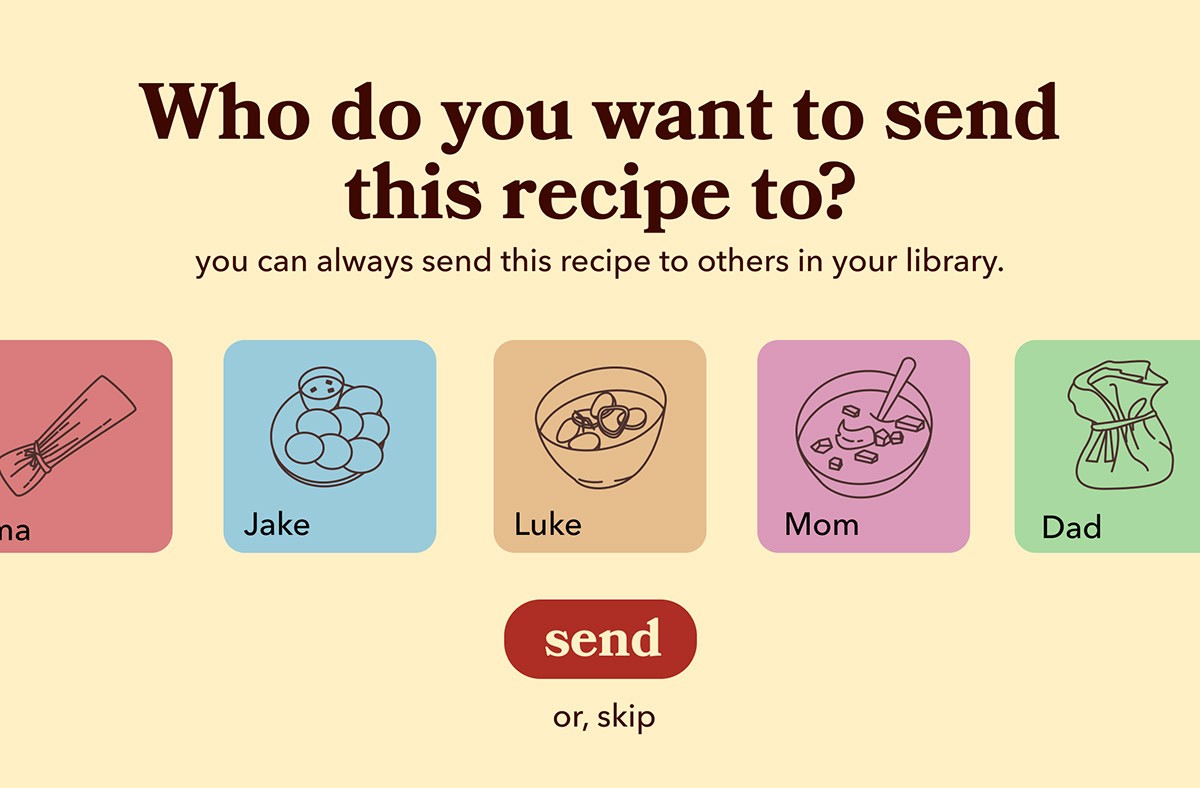
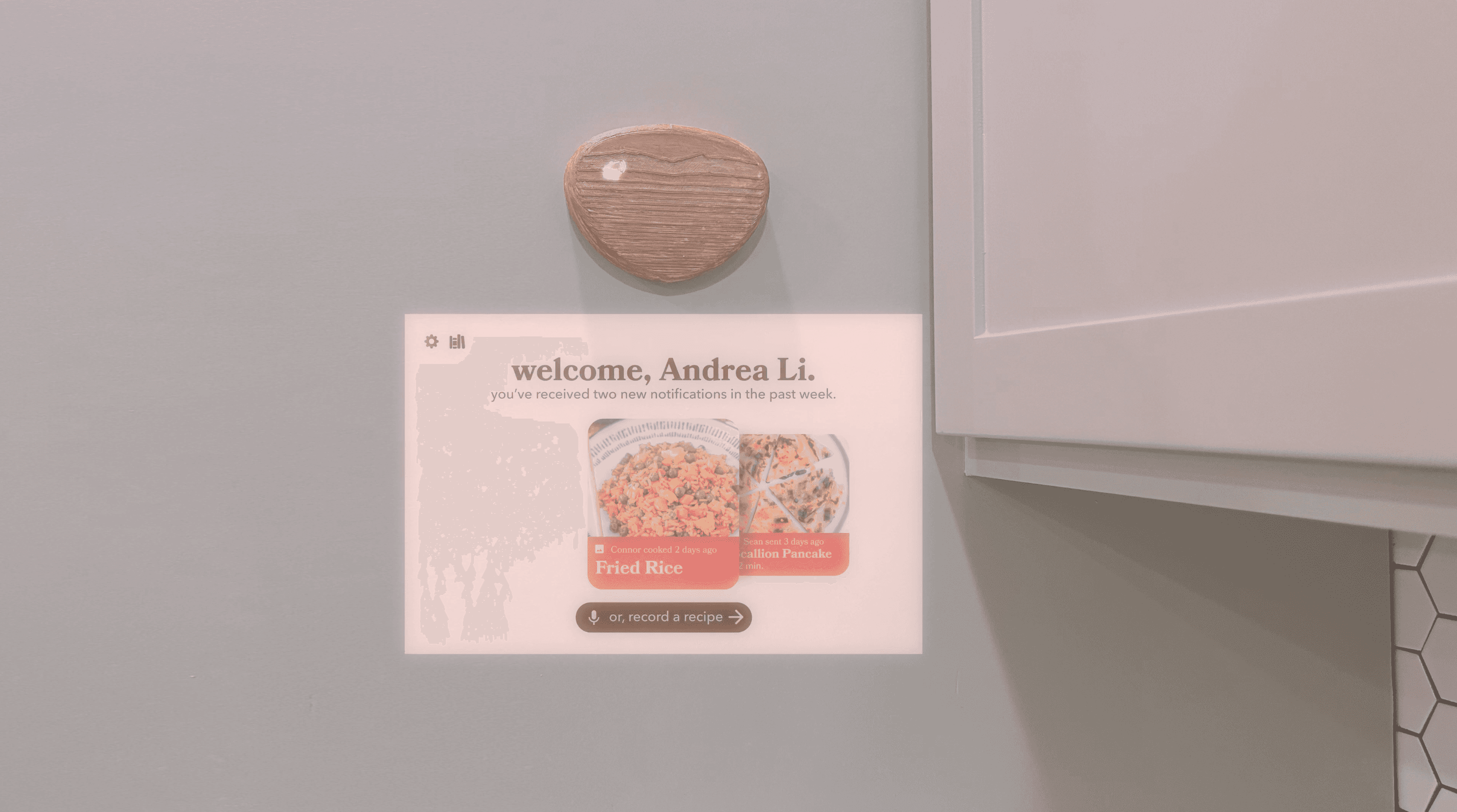
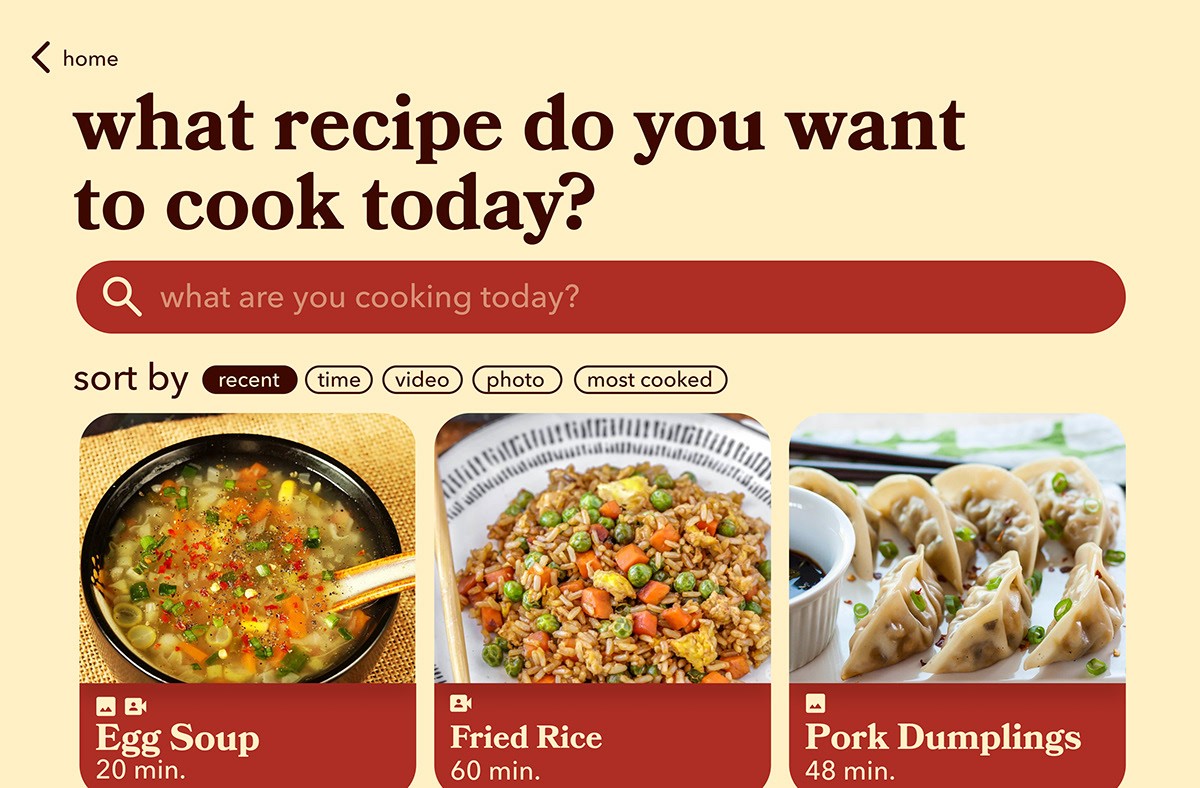
The initial screen that pops up when turning on Simmer guides the user to record a new recipe or select a recipe to follow.
Following Along
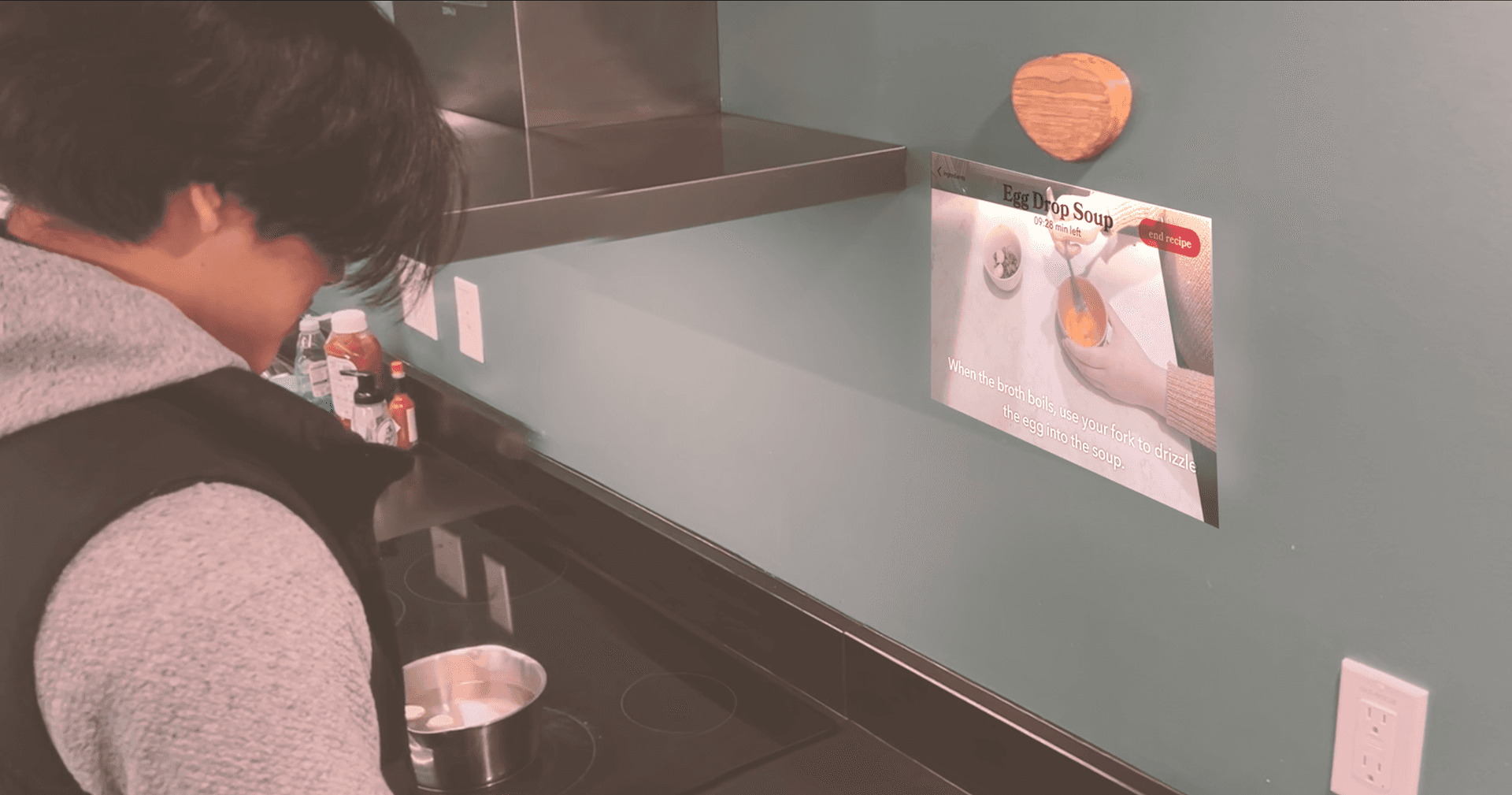
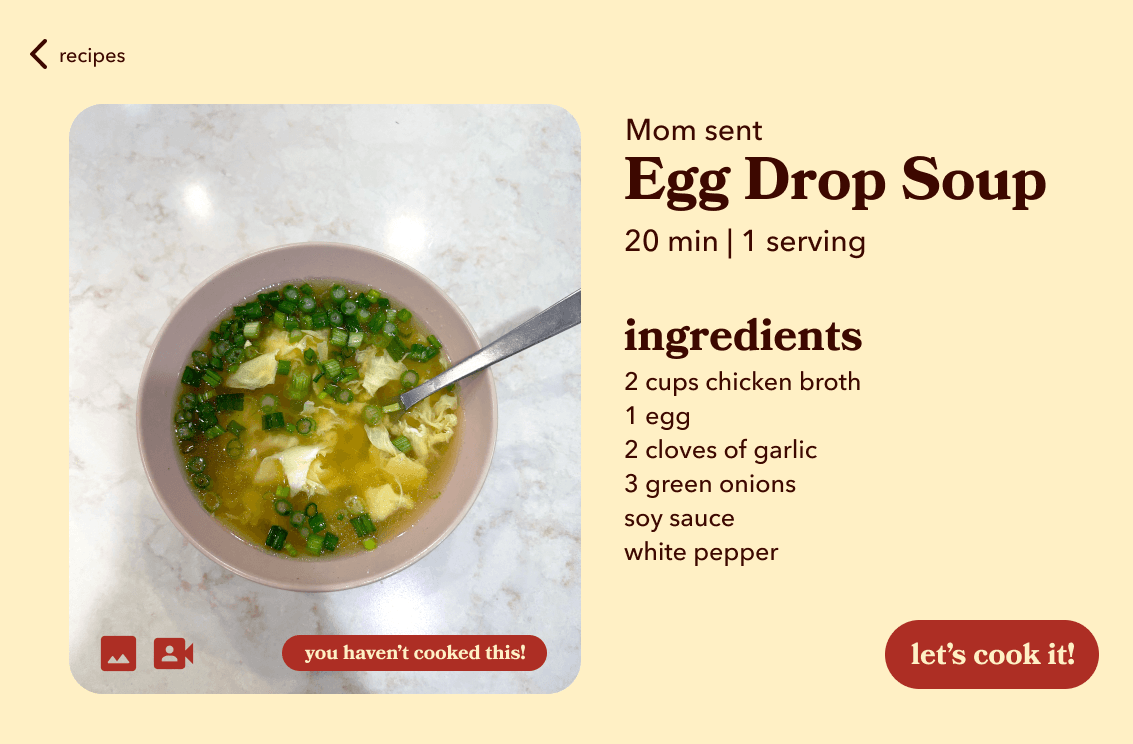
After selecting a recipe, the user can follow along by uses key phrases such as, "What's the next step," or "Replay last step."
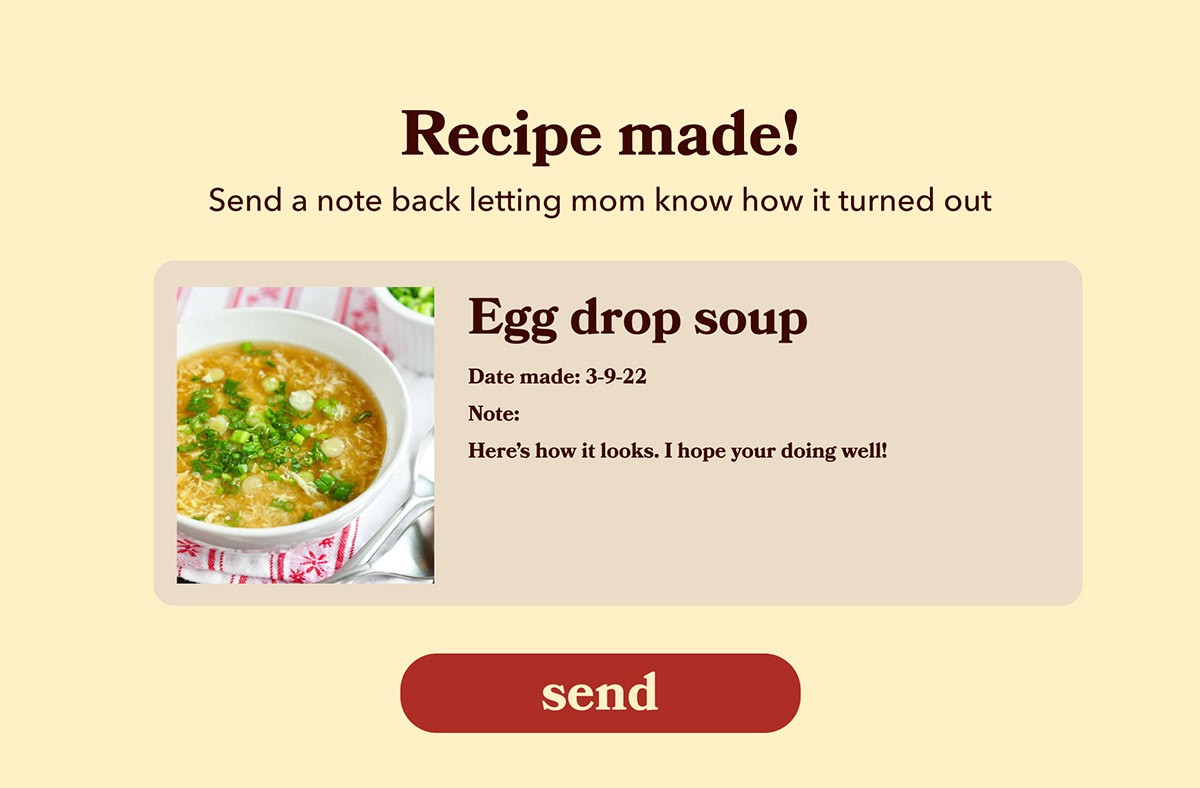
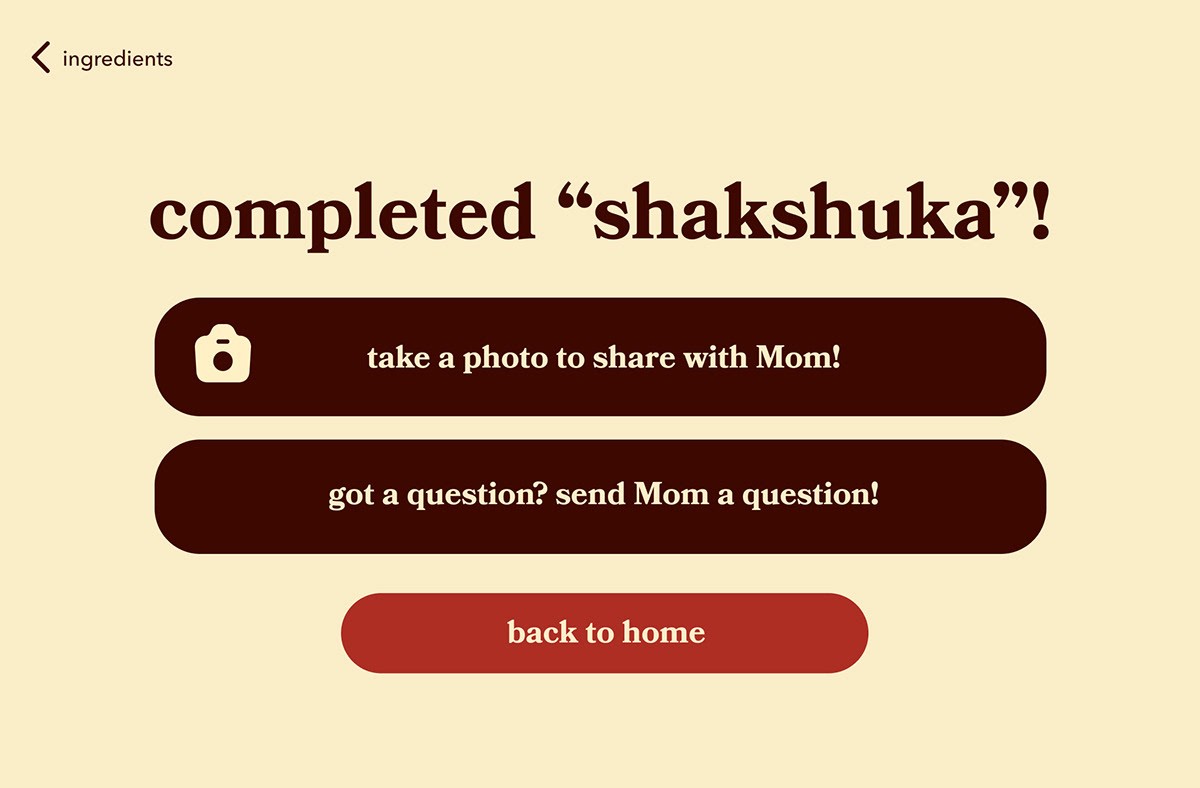
The user recording the recipe can give instructions while cooking or add the spoken notes after. This allows for an easy, hands-free cooking experience.